
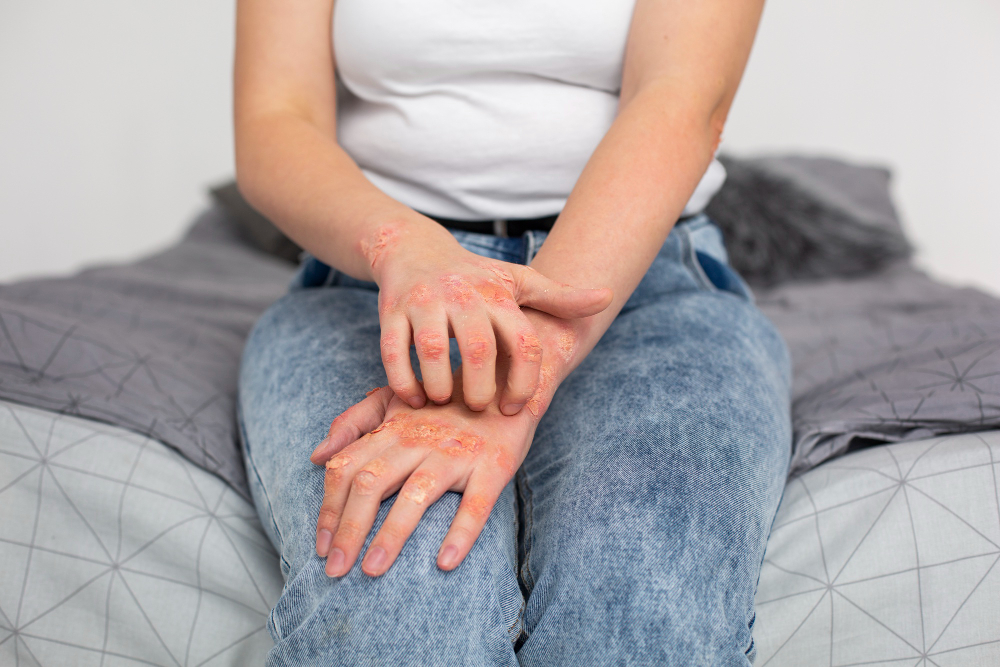
What is Eczema?
Eczema is a common skin condition that causes dry, itchy, and inflamed skin. Many people call it atopic dermatitis. It can affect people of all ages, but it often starts in childhood. Eczema symptoms can come and go. Sometimes, the skin gets red, cracked, or even blisters. Although eczema is not contagious, it can be uncomfortable. Because it can last for years, many people look for effective eczema treatment. Understanding eczema causes can help you manage flare-ups. According to the CDC, millions of people worldwide live with eczema.
Common Symptoms of Eczema
Eczema symptoms can vary from person to person. However, some signs are very common. For example, you might notice:
Sometimes, symptoms get worse during certain seasons or after contact with triggers. If you notice these signs, you may have eczema.
Causes and Risk Factors
Doctors do not know the exact cause of eczema. However, several factors can increase your risk. For instance, genetics play a big role. If someone in your family has eczema, asthma, or allergies, you are more likely to get it. Also, your immune system may react too strongly to certain triggers. These can include:
Because triggers are different for everyone, it helps to keep track of what makes your eczema worse.
How Eczema is Diagnosed
Doctors usually diagnose eczema by looking at your skin and asking about your symptoms. Sometimes, they may ask about your family history. In rare cases, a doctor may do a skin test to rule out other conditions. For example, they might check for allergies. However, most of the time, a physical exam is enough. If you have ongoing skin problems, see a dermatologist for a full check-up.
Treatment Options for Eczema
There is no cure for eczema, but many treatments can help control symptoms. Your doctor may suggest:
Because every person is different, your treatment plan may change over time. Always follow your doctor’s advice for eczema treatment.
Lifestyle Tips and Home Care
Simple changes at home can make a big difference. For example, you can:
Because triggers can vary, it helps to notice what makes your skin worse and avoid those things.
Prevention Strategies
While you cannot always prevent eczema, you can lower your risk of flare-ups. Try these steps:
Because prevention is easier than treatment, these habits can help keep your skin healthy.
When to See a Dermatologist
Sometimes, home care is not enough. You should see a dermatologist if:
Because eczema can be different for everyone, a dermatologist can help you find the best treatment plan.
Consult a dermatologist at Dhanvantri Poly Clinic for personalized advice on managing eczema.